Access mats / Uses
Sensitive environmental areas
Work in wetlands, muskeg, farmland and other sensitive areas while keeping your footprint as small as possible.
Get a quote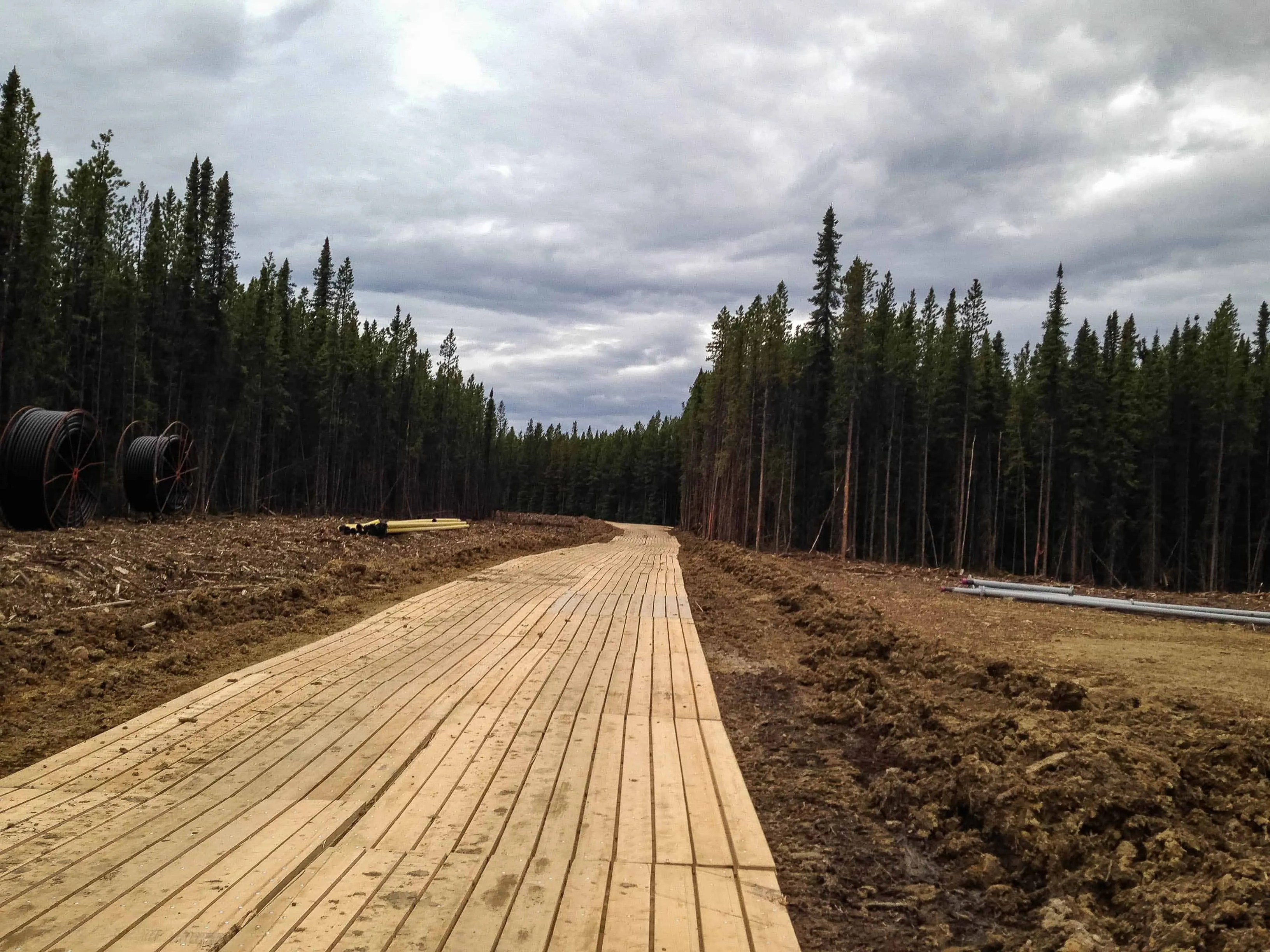
Mats for sensitive environmental areas
Alberta projects regularly cross wetlands, muskeg, riparian areas, native prairie and cultivated land, where protecting the ground matters as much as getting the job done. Mats spread equipment loads over a wide area, helping limit rutting, compaction and soil mixing, and they leave no gravel or fill behind when they’re removed.
The challenge
- Fragile groundWetlands, peat and saturated soils are easily damaged and can take years to recover.
- Environmental commitmentsProjects often have conditions and plans that limit ground disturbance in sensitive areas.
- Reclamation costsRepairing ruts, compaction and mixed soils after the fact adds time and cost to every project.
How our mats help
- 01Lower ground pressureInterlocked mats distribute heavy loads, greatly reducing damage to subsoils.
- 02Nothing left behindMats are lifted out when the job is done, with no gravel or fill to remove.
- 03Helps meet your requirementsMatting is a widely used tool for helping projects meet their environmental and reclamation commitments.
Mat details
- Core
- Solid core
- Boards
- 3-ply green Douglas fir
- Bolts
- 181 carriage bolt pattern
- Size
- 8′ × 14′
- Weight
- 1,880 lb
- Countersink
- Minimal
Common questions
Are mats suitable for wetlands and muskeg?
Mats are widely used to access soft, wet ground. Always confirm your project’s permits and environmental requirements for work in or near wetlands and water bodies.
Will mats completely prevent ground disturbance?
No surface protection removes all impact, but mats greatly reduce rutting and compaction compared with driving directly on the ground.